
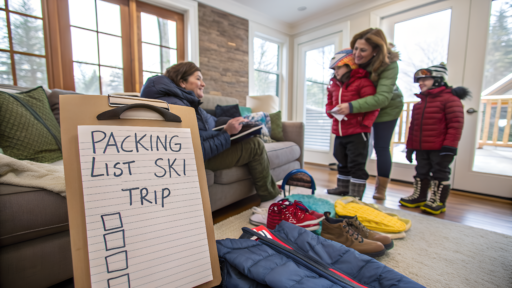
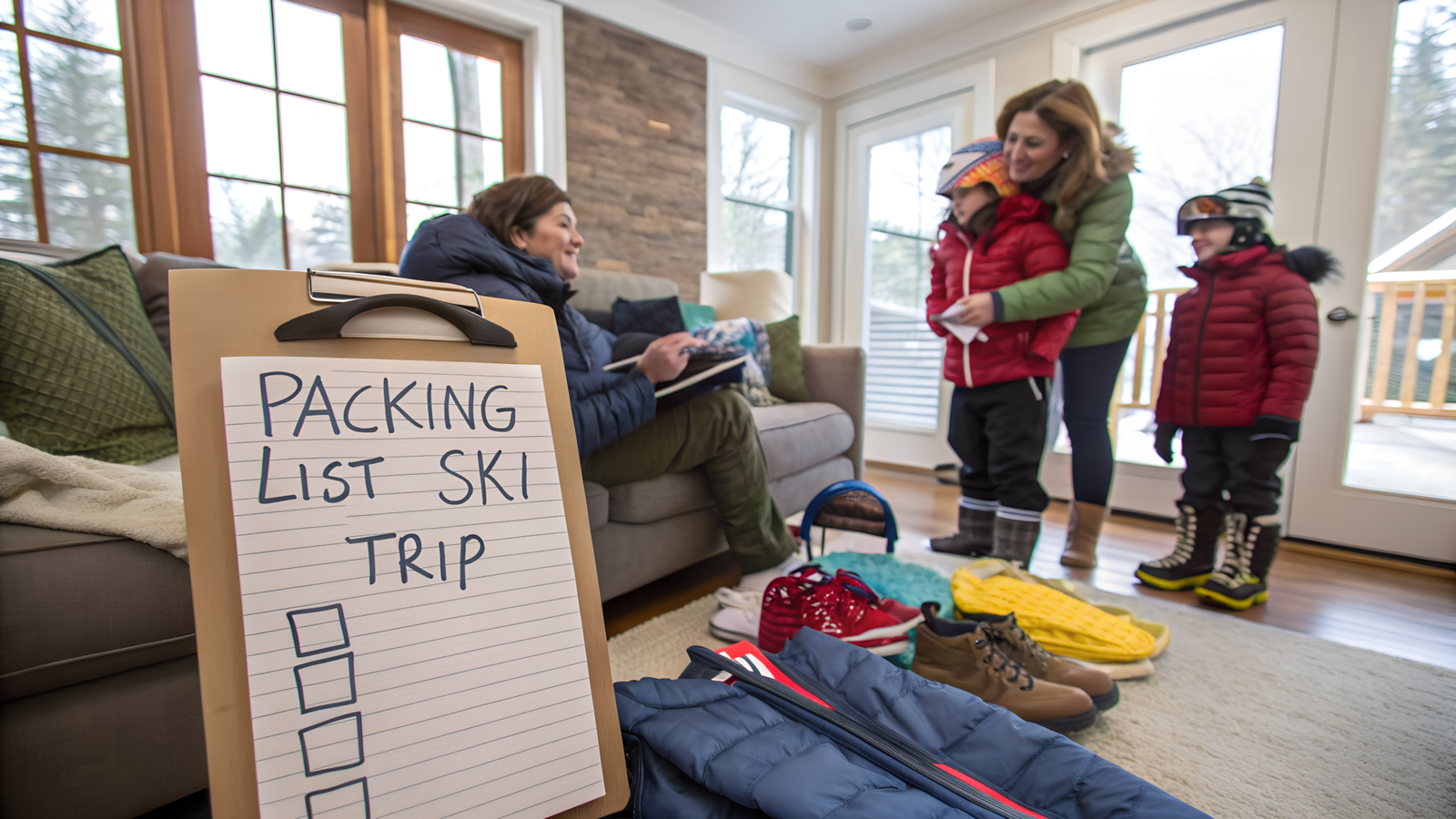

A family ski trip usually starts with the same thought: “Did we definitely pack everything?” and with suitcases… oh, those suitcases. Only with experience does the real understanding come: it’s not about how many things you bring, but which items you actually pack.
A good packing list doesn’t just save you from cold or exhaustion. It saves you from small breakdowns that snowball and ruin the day. Wet socks. Frozen fingers. A kid who gets tired too early. And plenty of other little things.
Here, I’ve put together a tested set of solutions that helps you move through a ski trip calmly.
And yes, this is not an instruction manual. In summary, it’s simply about small details that unexpectedly turn out to be the most important. Plus experience lived many times — in cold, in chaos, in joy, and in exhaustion.
1. Cold-Weather Layers That Actually Work on the Slopes
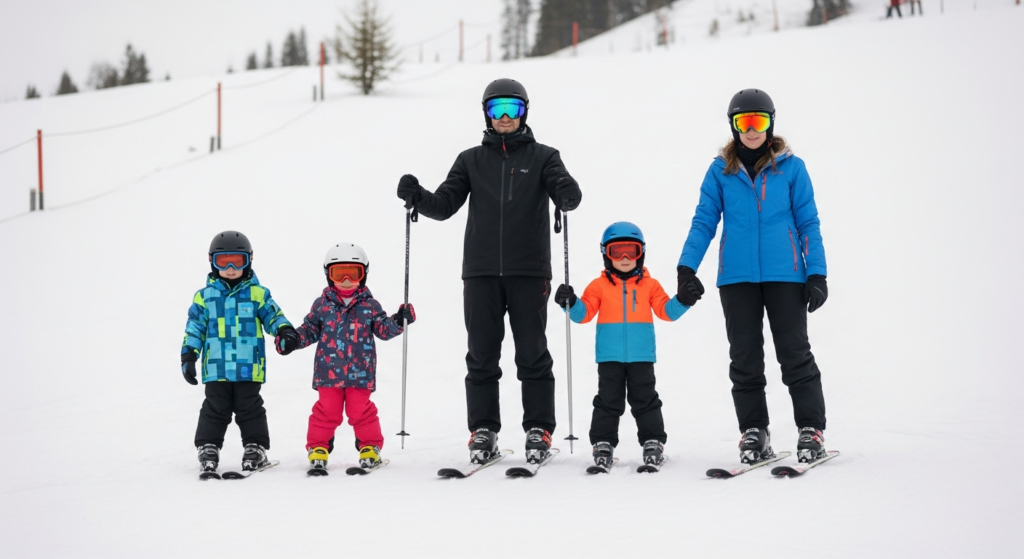
For a family ski trip, proper clothing layers are the foundation. If someone is freezing or, on the contrary, overheating, the day on the slopes ends much earlier. Tested. More than once.
In the same way, layers need to work together, not just “be warm.” This matters even more when you’re skiing as a family.
1. Base layer: not cotton. Ever
It all starts with what’s closest to your skin. And here I’ll say it clearly — cotton does not work on the slopes. It absorbs moisture, stays wet, and starts cooling your body down. Even at 20–25°F (around −4°C), you feel it very fast.
What actually works:
- merino wool thermal underwear or quality synthetic
- fabric weight around 200–250 g/m²
- long sleeves and full-length bottoms
We’ve tried many options, and merino turned out to be the most stable one. Kids can sweat, fall into the snow, get back up — and still not shiver from cold. Yes, it’s not the cheapest purchase. But it immediately solves the base warmth problem for both adults and kids.
2. Mid layer: warmth without extra bulk
This is where people often try to “play it safe” and put on something very thick. And this is exactly where problems start. A bulky layer restricts movement, leads to overheating fast, and traps moisture.
What works better:
- thin fleece
- light insulated jacket with synthetic fill
For kids, I always choose fleece with a zipper — being able to unzip it on the lift is very important.
For adults, lightweight jackets that are easy to add or remove without turning into a “layered cabbage.”
Two thin layers are almost always better than one thick one. This rule has never failed me.
3. Outer layer: protection, not insulation
When it comes to jackets and pants, I look at specs, not brands.
The minimum that actually works:
- 10,000 mm waterproof rating
- breathable membrane
- sealed seams
This is especially important for kids. They sit on the snow, fall, build things right on the slope. And if the outer layer gets wet, no layers underneath will save the situation.
4. How many layers you really need — and how to live in them all day
In most conditions, the setup is simple:
- One base layer
- One insulating layer
- One protective layer
At temperatures below 5°F (around −15°C), I add one more thin layer between the base and mid layer — more often for kids, sometimes for myself. It’s easier to take something off than to warm up a frozen child in the middle of a run.
And one more important point — we always bring one small backpack per family, just for layers.
Not for food. Not for water. For clothing only.
It usually contains:
- a spare mid layer for a child
- a thin fleece or vest for an adult
- a dry buff or balaclava
Because mountain weather is unpredictable. Cold in the morning, then sun, then wind, then a long lift line. Kids run around wet, then suddenly stand still and get cold. And when you can quickly add or remove a layer without going back to the hotel or ending the day early, everything feels calmer. Less irritation. More skiing.
And that’s exactly why we pack all of this in the first place.
2. Après-Ski Clothes Everyone Wants to Change Into
After coming back from the slopes, everyone is tired. Everyone is a little cold. Someone overheated. Someone is wet. And what you change into next really matters. Your body needs to warm up fast, relax, and stop “being on alert.”
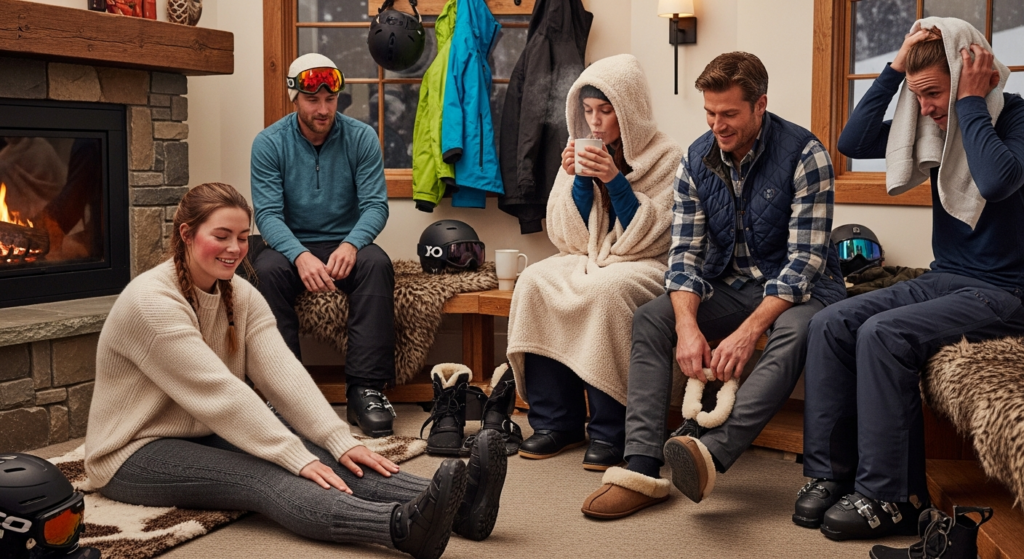
1. The first layer after the slopes: dry and warm right away
The biggest mistake is staying in thermal underwear “just a bit longer.” Even if it feels dry. No. After an active day, the body cools down very quickly.
What works best:
- soft cotton or bamboo long sleeve
- loose fit
- no pressure or tight, clingy fabric
We change almost immediately — sometimes right in the car. Especially the kids. It changes their state instantly: fewer meltdowns, less fatigue, more energy for the evening.
2. Loose pants you can lie on the floor in
Après-ski pants are not just “loungewear.” They are basically a recovery uniform.
I choose fleece or heavy cotton, an elastic waistband, and there must be extra room in the fit (especially for kids).
In the evening, kids sit on the floor, play, sprawl out, stretch toward the fireplace or heater. They need warmth everywhere, without riding-up legs or cold knees.
For adults, we’ve long loved things like Hanes Men’s EcoSmart Fleece Sweatpants — simple, warm, and truly home-like.
3. Top layer: something soft instead of a jacket
After taking off a ski jacket, the body often feels cold, but putting on another “technical” layer is the last thing you want. This is where fleece hoodies, soft cardigans, and lightweight puffer vests work really well.
Especially if you still go outside in the evening — to walk around the village, stop by a shop, or just breathe in the cold air.
4. Socks: a separate conversation
If there’s one thing I never save money on during ski trips, it’s after-ski socks.
The rules are simple:
- only dry
- medium or high density
- no tight elastic bands
We always bring two pairs of après-ski socks per person. One goes on right after skiing. The second is for the evening, after a shower.
5. Kids’ après-ski layer
With kids, everything is both simpler and harder at the same time. If a child is warm and cozy, they’re happy. If not, no games or cartoons will save the evening.
We always bring a fleece onesie or soft set, an extra top, and warm socks just for indoors.
And one small but very important detail — no “growing into it” clothes for evenings. During the day, fine. In the evening, no. Everything needs to fit comfortably right now.
Après-ski clothes matter for recovery after cold, movement, and wind. And when this transition is done right, the evening actually becomes enjoyable.
3. Kid-Proof Ski Gear You’ll Be Glad You Packed
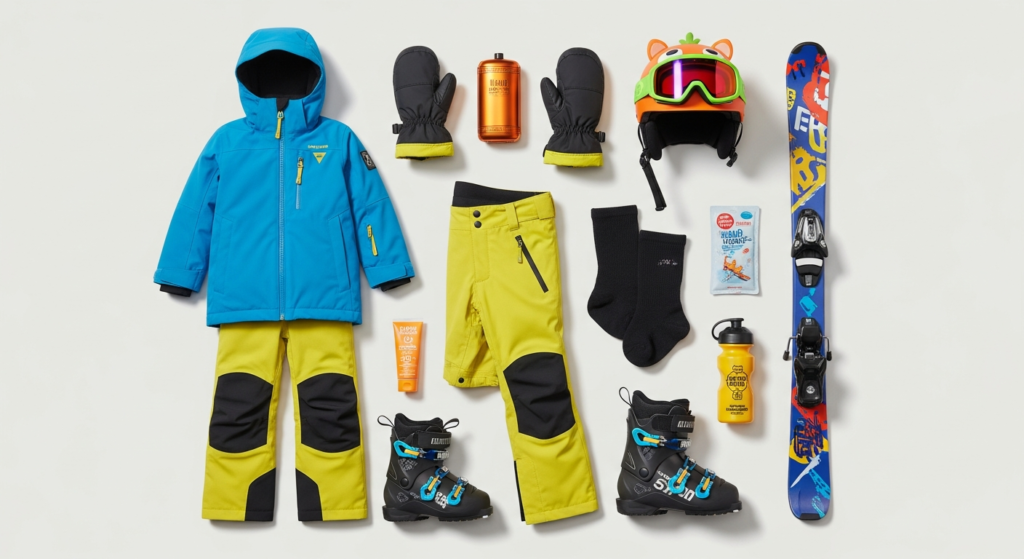
An adult can tolerate cold or discomfort. A child can’t. And when gear fails, the whole day starts falling apart in a chain reaction. For me, kid-proof ski gear means items that can handle movement, falls, snow, and pure child impulsiveness.
1. Mittens that actually keep hands warm
Hands are the first weak point. And this is where I stopped experimenting a long time ago.
Mittens work better than gloves. Always. Especially on lifts and during snow play.
I look at a few things right away:
- long cuffs that go under the jacket sleeve
- waterproof outer layer
- insulation that doesn’t get stiff in the cold
If a child can calmly open and close their fingers, the mittens are right.
From what truly survived our trips, I can name Hestra Kids’ Zip Long Mitt. It’s a rare case where the gear doesn’t distract the child at all. They just ski. And that’s exactly what you want.
2. A helmet you don’t want to take off
A helmet doesn’t just guarantee safety — it also provides comfort. If it presses, slips, or fits poorly, a child will touch it every couple of minutes. Which means frustration.
A good kids’ helmet feels like part of the outfit. You put it on — and forget about it.
It’s important to me that the inside is soft and the size adjustment is simple. Kids grow, and the helmet needs to adapt.
Giro Launch Helmet worked great for us. No extra features, no pressure, no complaints. It’s one of those items you simply don’t think about. In a good way.
3. Anything touching the face should have no compromises
Cheeks, neck, chin — the most sensitive areas. If the fabric itches, rubs, or bunches up, a child will take it off at the first chance.
I’ve set a simple filter for myself:
- only soft fleece or merino
- minimal seams
- density that blocks wind without feeling suffocating
We always bring a spare balaclava or buff. One almost always gets wet — from snow or breathing.
A good example is Turtle Fur Kids Original Balaclava. It’s soft, doesn’t irritate the skin, and doesn’t trigger the urge to “take it off right now.”
4. Goggles that don’t turn into an enemy
With goggles, everything is very simple. If they fog up or press — a child stops wearing them. And no amount of convincing helps. I pay attention to ventilation and how the goggles work with the helmet. When the fit is right, pressure on the nose disappears, and the child can ski calmly without distractions.
5. Small things that always save the day
These are the items that live in pockets or a backpack. I almost always bring:
- extra mittens
- an additional buff
- dry socks
Sometimes all of this stays untouched. And sometimes it’s exactly what you need.
And when these things are within reach, you don’t end the ski day early just because “something got wet.”
Subsequently, Kid-proof ski gear means items that forgive mistakes, falls, and childlike enthusiasm. And the less you think about gear on the slopes, the more energy you have left to simply be together.
4. Accessories That Prevent Cold Fingers and Wet Socks
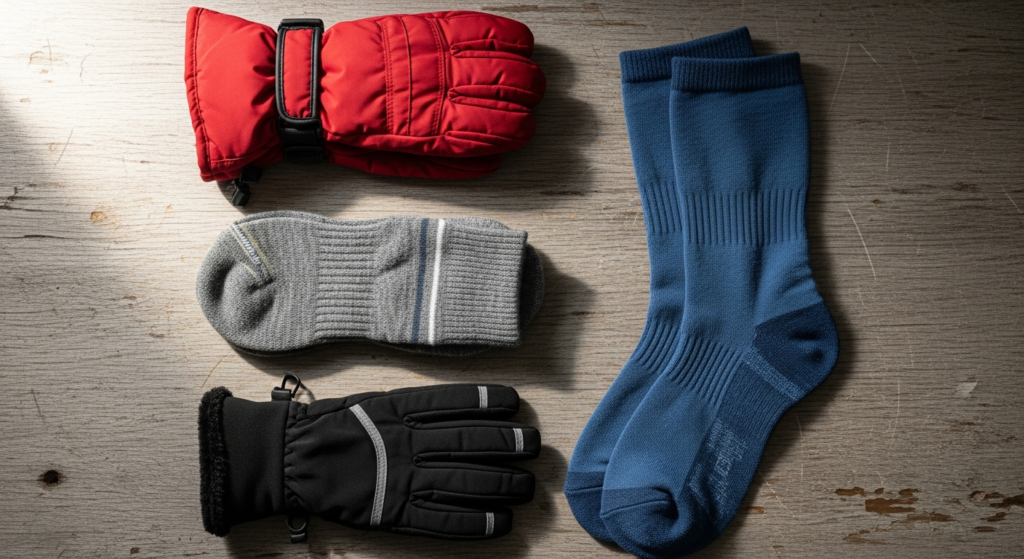
Accessories feel like small things right up until someone’s fingers start freezing or socks get wet. I stopped treating these items as “extras” a long time ago. They’re insurance against plans falling apart, especially on family trips.
1. Thin liners for gloves and mittens
People usually remember these only after their first really cold trip. Liners don’t look important, but they’re exactly what adds that extra layer of warmth that can decide how the day goes.
I always pay attention to three things:
- that they are thin and don’t restrict finger movement
- that the material moves moisture away
- that they can be removed and dried quickly
For kids, liners are especially useful — they take off their mittens more often than adults, and their hands don’t end up completely bare. Lightweight merino options work well here, without feeling like an “extra layer.”
2. Hand and toe warmers: when the day runs longer than planned
I’m very calm about warmers. Sometimes the temperature drops more than expected; lifts stop running; a child just gets cold faster.
In those moments, disposable warmers are simply common sense. A few hours of steady warmth in a pocket or boot can save the rest of the day and the mood of the whole family.
HotHands Hand Warmers take up almost no space but give peace of mind if the cold turns out stronger than the forecast.
3. Socks and moisture that doesn’t come from outside
Wet socks aren’t always caused by snow getting in. More often, it’s sweat that can’t evaporate inside the boot.
That’s why I stopped chasing the “thickest” socks. It matters much more that socks breathe, don’t have rough seams, and work well while moving. Merino wool socks clearly win here. They keep feet dry much longer than standard options and don’t lose their shape after washing.
4. Snow inside boots: a small but annoying problem
If a child likes sitting in the snow, building things with their hands, or just falls often, snow almost inevitably gets inside their boots.
Gaiters or snug cuffs solve this problem without complicated setups. This isn’t a must-have for everyone, but in certain conditions it saves you from changing clothes mid-day and keeps socks dry.
5. Backup as a strategy, not paranoia
This is where a list really makes sense. Short and realistic.
I almost always bring:
- a spare pair of socks
- extra glove liners
- a couple of warmers “just in case”
Ultimately, sometimes all of this stays untouched. Sometimes it’s all used in one day.
And every time, I’m glad I thought ahead.
5. Travel-Friendly Snow Boots for Walking Around Town
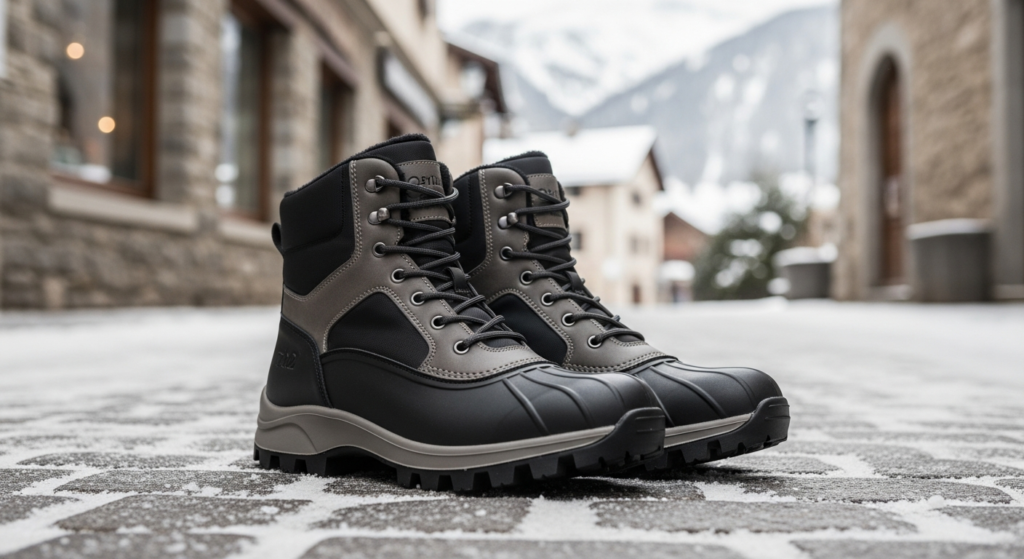
Snow boots are not just about function — they also need to be comfortable. I’m honestly tired of shoes that look great at home but turn into torture on the streets of a snowy resort.
1. How to choose truly travel-friendly snow boots
A boot needs to be comfortable for walking, not just “warm and waterproof.” Gear for the slopes is all about technique and function. But for town, you need a balance between technology and comfort.
This is what I pay attention to:
- warmth without overheating
- reliable waterproofing
- a soft sole that doesn’t make each step feel heavy
- weight that doesn’t exhaust you after miles of walking
Specs on paper don’t mean much on their own. What matters is how the boot behaves in real conditions: snow, ice, slush, a walk to a café and back with bags in your hands.
2. Why comfort matters more than a “temperature rating”
On one of our first winter trips, I brought very warm insulated boots. On paper, they were perfect for low temperatures. But in reality?
They were so heavy and stiff that I ended up switching to sneakers with winter insoles halfway through the trip.
That’s when it clicked: travel boots need to be walkable, not just warm.
Professional alpine boots provide warmth and protection on the slopes. But walking between restaurants, shops, and a Christmas market requires completely different footwear — light, comfortable, and made for moving.
3. My compromise: comfort and protection
For many years now, I’ve preferred models with a soft but stable sole, insulation without the feeling of a “boot capsule” around your foot. They’re not as “extreme,” but they let you walk freely all day without tired legs.
One pair that became a real find for us is Sorel Joan of Arctic Boots. They feel like boots you can actually live in for a couple of days outside of skiing.
This matters, because many people either grab something “simple” or go all-in on “maximum warmth.” And when your feet are already tired on the second walk, it affects the mood of the whole family.
4. What I recommend for kids
Kids’ feet react to discomfort even faster. They get cold or tired quickly, and the entire walking plan falls apart.
For children, I choose boots with:
- a soft, flexible sole
- insulation, but not too much
- a simple fastening system (Velcro or zipper)
Most of the time, these are models below the “expedition” level, but they work much better for town. Kids walk calmly, don’t pull your hand, and don’t ask to “just go back home already.”
5. Small details that actually matter
And here I’ll use a list again, because these are the little things that aren’t obvious but truly save a walk:
- soft insoles that can be removed and dried
- rubber toe caps for protection from snow
- non-slip soles, especially on ice
- the ability to put boots on and take them off easily, even with gloves
Yes, it sounds minor. But these details are exactly what turn winter walks from a struggle into an experience you want to repeat.
Travel-friendly snow boots should keep your feet warm without making you feel the weight of every step. So after a walk, you want to go somewhere else — not take them off and forget them forever.
6. Snacks and Thermos Drinks for Long Lift Days
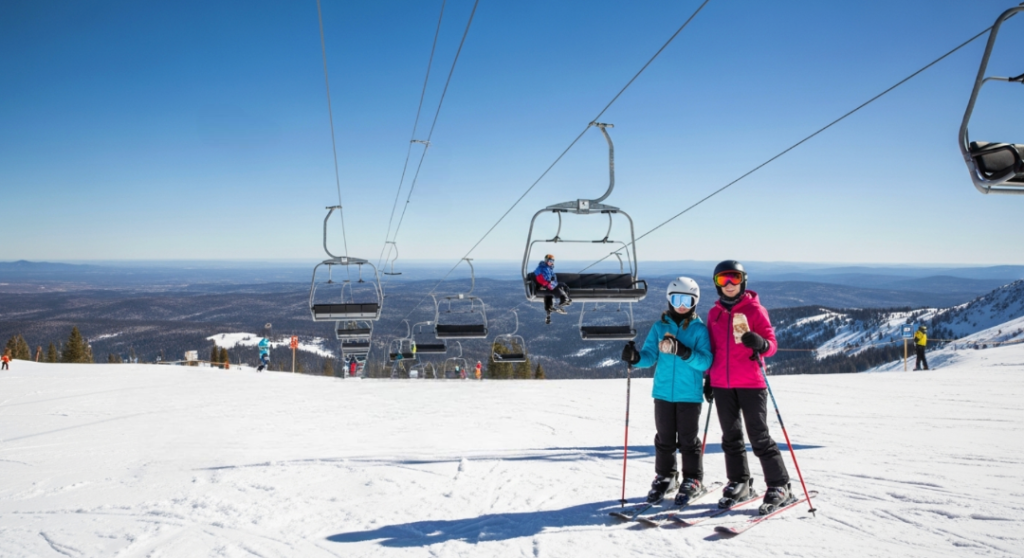
You can be dressed warmly, but when blood sugar drops, everything starts to feel irritating: the waiting, the wind, even the slope itself. Especially for kids. And this is where food becomes part of your gear.
I stopped relying on mountain cafés a long time ago. First, the lines. Second, there isn’t always something kids will actually eat. Third, the prices… you know how that goes. So we almost always bring our own.
1. Snacks that don’t freeze solid or turn into crumbs
This is the first thing I think about when packing the backpack in the morning.
Food needs to be simple, filling, and easy to eat in the wind.
I usually pack:
- nut bars without chocolate coating
- jerky or turkey sticks
- soft oat-based energy bars
Chocolate in the cold is a bad idea. It’s either rock hard or melts at the worst moment.
We often bring KIND Healthy Grains Bars — they don’t crumble, don’t freeze solid, and survive a few hours in a jacket pocket just fine.
2. Homemade food vs “quick energy”
I’ve noticed that after sugary snacks, kids get a short burst of energy and then crash hard. Something more solid and familiar gives much steadier fuel.
Sometimes that looks like:
- pieces of banana bread
- homemade muffins
- dense oatmeal cookies
Yes, it takes prep ahead of time. But the effect is noticeable. Fewer meltdowns. Less “I’m tired.” More willingness to keep skiing.
3. A thermos is the thing that changes how cold feels
A hot drink on the slopes feels almost therapeutic. Especially when the wind picks up or the day runs longer than planned.
We don’t bring coffee for kids. Usually it’s:
- warm apple cider
- herbal tea
- lightly sweetened cocoa
For adults — yes, coffee. But very hot. Stanley Classic Vacuum Insulated Bottle holds heat extremely well — tested over many winters. After 4–5 hours, the drink is still warm, and on the mountain that feels like a luxury.
4. How to pack everything so it’s easy to reach
I try to spread snacks across pockets instead of putting everything in one place. One “quick snack” goes in a top pocket, while the thermos stays closer to the back so it keeps warmth longer.
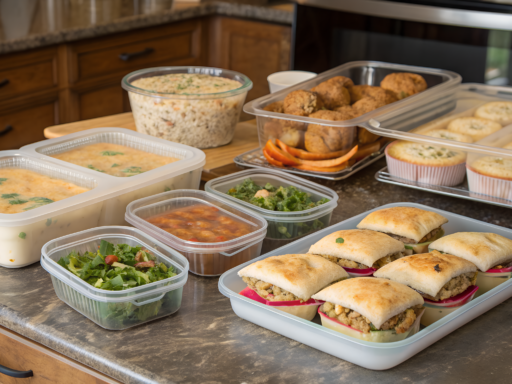
When food and drinks are easy to grab without long stops, there’s no need to urgently look for a café or head back home early.
5. A small psychological detail
Sometimes kids ask for a snack not because they’re hungry, but because they’re tired or cold. And a warm sip from the thermos plus a few bites of familiar food works better than any persuasion.
Because it gives kids a sense of care in the middle of cold and wind. And that matters a lot.
7. Ski Trip Toiletries You Always Forget Until Night One
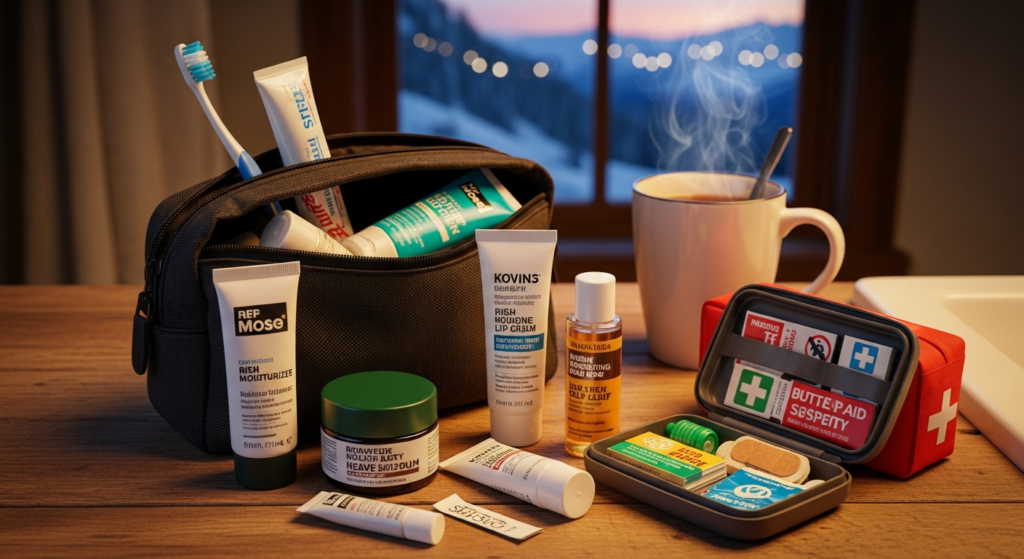
There’s a very specific moment on every ski trip. In the evening, you go to wash your face and suddenly realize that the most basic things are missing. You forgot them.
1. Skin hydration — the moment when it’s already too late
Mountain air dries out skin very differently than at home. You don’t notice it right away, but by evening your face suddenly feels tight, like you spent the whole day exposed to wind without protection. Especially after a hot shower.
I always bring a separate, rich face cream, not a universal one. Something that truly locks in moisture and doesn’t sting when the skin is already irritated.
For kids, this is critical — cracks on cheeks can appear in just one day.
For trips, I like CeraVe Moisturizing Cream — thick, fragrance-free, and safe to use for both kids and adults without overthinking it.
2. Lip balm that works, not disappears
Lips get windburned in the mountains even for people who usually never think about them. And by the time you remember lip balm, it’s already too late and smiling feels uncomfortable.
I prefer dense balms without strong scent, the kind that don’t “melt away” in ten minutes. And I always pack several and put them in different places.
Because one always gets lost, and another one somehow ends up in a kid’s pocket.
And yes, in the evening, when your lips finally stop burning, you realize this small thing wasn’t small at all.
3. Hair and scalp after a full day in a helmet
You take the helmet off — and it feels like your head is still wearing it. The scalp is dry, and hair is tangled. I bring a mild shampoo without harsh fragrance and a simple conditioner or leave-in treatment. Nothing complicated. Just enough to feel put together in the evening and not like your body is still stuck in “slope mode.”
4. Small medical items that save the evening
This is the section that’s easy to skip. And then you suddenly notice irritated skin, a small crack, or a headache from wind and altitude.
I don’t pack a full first-aid kit, but I always include a few basic medical items. Because when something starts bothering you in the evening, you want to fix it quickly, not drive somewhere or “wait it out until morning.” Having these things doesn’t make the trip medical. It makes it calm.
5. A short evening check — no overthinking
Before leaving home, I check that the bag includes:
- rich face cream
- lip balm (better two)
- mild shampoo and hair care
- a few basic medical essentials
These aren’t “just in case” items. These are for that very first evening, when you want to relax instead of solving problems.
8. Tech and Gadgets That Make Ski Days Easier for Families
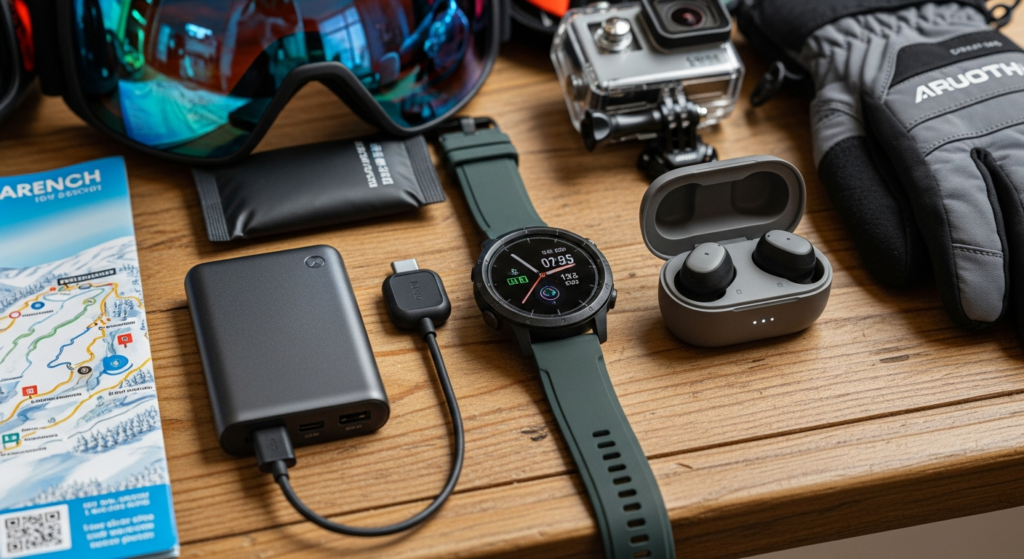
I’m very calm about tech gear. I only take things that actually make the day easier, not things that demand attention.
1. A power bank that doesn’t die in the cold
Phones drain much faster in freezing temperatures — everyone knows this, and still gets surprised every time.
And a phone on the slopes isn’t entertainment. It’s communication, maps, photos, sometimes emergency calls.
I always take one high-capacity power bank and keep it in an inside jacket pocket, close to my body. That way it lasts longer and actually saves the day.
Yes, it’s heavy. But one is enough to recharge the whole family’s phones several times. And when someone suddenly has 5% left at the top of the mountain, you just solve the problem calmly.
2. Smartwatch or tracker — not for fitness, but for logistics
I don’t use them as “fitness tools.” For me, this is a way to not pull out my phone every five minutes.
Check the time.Understand how much farther you need to walk.See a message from your partner or instructor.
When your hands are in gloves and the wind hits your face, this simplifies everything. Especially when you’re with kids.
3. Headphones — not for music, but for pauses
This one isn’t obvious, but it works. Sometimes a child (and an adult too) just needs to disconnect — on the road, in line, on the way back.
I bring simple wireless headphones with no complicated controls. Not for skiing. For those moments when the day is long and overloaded.
Apple AirPods (2nd Generation) are convenient here exactly because of their simplicity. Put them in — they work. Take them out — done. No settings, no surprises.
4. Cables and small things that disappear first
A list makes sense here, because this is the kind of “small logistics” you remember too late.
I always pack:
- a short charging cable (less tangling)
- a second cable “just in case”
- a plug adapter if the trip is outside one country
These items barely take up space. But when you need to charge everything at once in the evening, they suddenly become essential.
5. One gadget per family is enough
I like the idea of one responsible item. One power bank. One set of cables. One person who knows where it is.
Otherwise, when tech isn’t scattered across backpacks and pockets, everything gets simpler. Fewer questions, less searching, less irritation. And tech stops being the center of attention — it just works.
Tech on a ski trip should reduce stress, not add to it.
9. Car and Flight Essentials for Getting to the Mountains
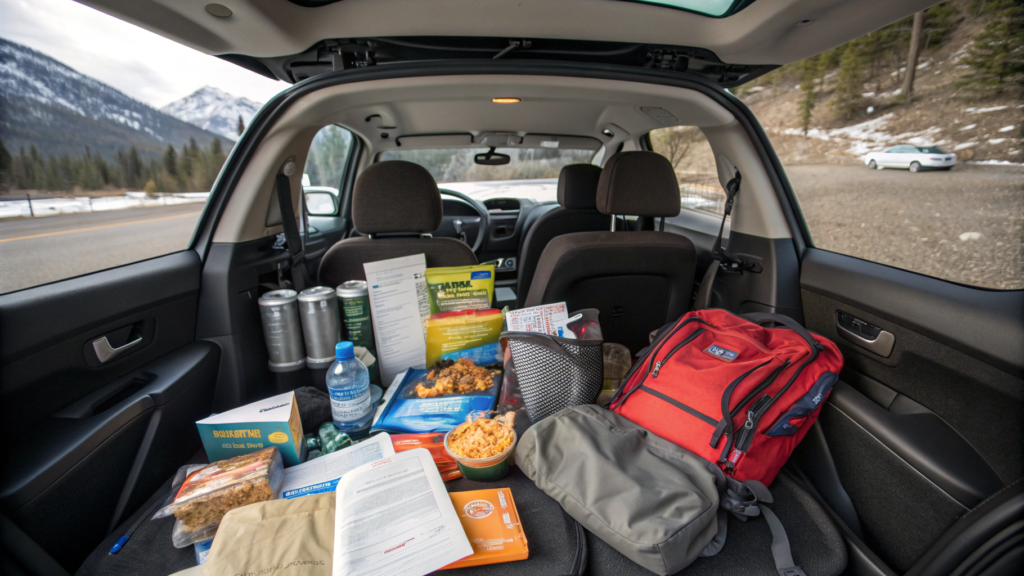
We’ve learned to treat the journey as day zero of the trip. You can’t skip it, but you can make it much smoother.
1. Car travel: when the drive feels longer than expected
Driving to the mountains sounds romantic until about hour three. Then the questions start, the requests to stop, and sudden fatigue — even if everyone is just sitting there.
I try to think through the small things in advance, because the big ones are obvious anyway.
Here’s what truly makes the drive easier:
- warm blankets or large scarves for the back seat
- a compact trash bag (an unexpectedly important item)
- wet wipes and hand sanitizer within reach
When the car feels clean and comfortable, kids get less irritated, and adults get less distracted. And the drive stops feeling like an ordeal.
2. Flying: dry air and fatigue before you even land
Flying to the mountains almost always means dry air, pressure changes, and that overall “completely drained” feeling. Especially if you’re flying with layovers.
I always bring a small flight kit — not cosmetic, but functional. Rich hand cream, lip balm, moisturizing nasal spray. These items take up almost no space, but they make a big difference in how you feel after landing.
And one more thing — layers. Even on the plane. Because the flight, the transfer, and waiting for luggage already add up to strain, and comfort really matters here.
3. Documents and small sources of stress
This isn’t an emotional point, but it’s very real. A lost document or boarding pass can ruin your mood more than a delayed flight. I always do it this way:
- all family documents in one place
- copies of tickets and bookings on the phone and offline
- one adult responsible for the “papers,” not everyone at once
Particularly, when it’s clear who’s responsible for what, anxiety drops fast. Kids feel that too.
4. A backpack you can reach without standing up
At the same time, there are always things you need immediately while traveling. And if you have to stand up, dig around, or pull out a suitcase to get them, irritation builds fast.
That’s why we always have one dedicated travel backpack. It holds water, snacks, wipes, headphones, a power bank. Nothing extra. Only what you might need right now.
This backpack travels with us from car to plane and back again. And every time, I’m glad I didn’t throw everything “somewhere into the suitcase.”
5. A short check before leaving
A list makes sense here — like a final still frame before the journey. Before driving off or boarding a flight, I check:
- documents and tickets
- the travel backpack
- water and snacks
- a warm layer within reach, even if “it’s not cold”
Those five minutes of checking save hours of stress later.
The road to the mountains isn’t a pause between home and the resort. It’s the first part of the trip. And if it goes smoothly, everything that follows tends to fall into place more easily.
10. Small Comfort Items That Make the Rental Feel Like Home
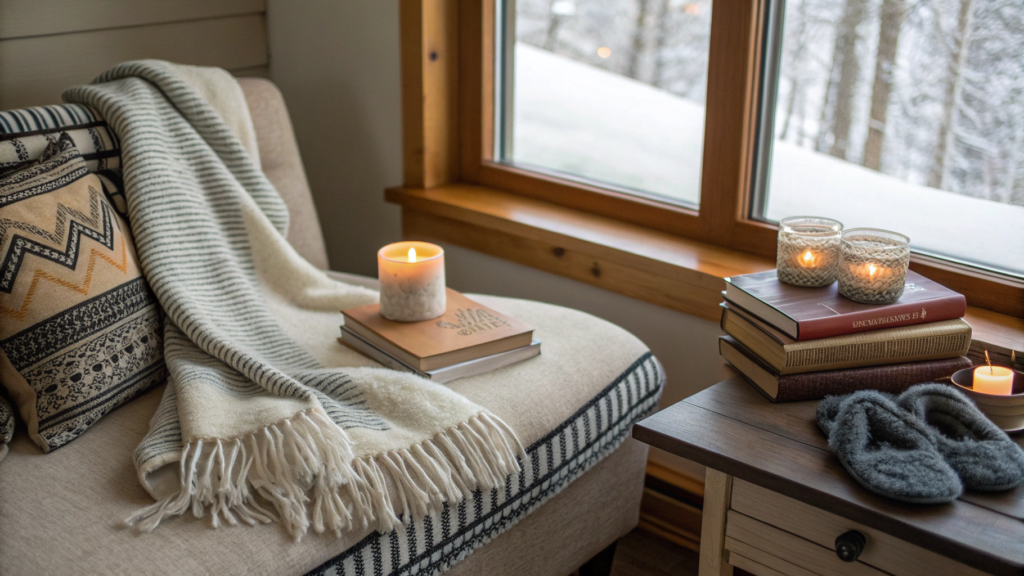
Even the most beautiful rental still feels… чужим after a ski day. Different smells. Different light. Unfamiliar sounds. And in the first hours after arrival, this hits especially hard — when everyone is tired, overstimulated, and just wants to be home. Even if only temporarily.
Over time, I realized something simple: the feeling of comfort doesn’t come from big things. It comes from small, very grounded details that send familiar signals of safety back to the body.
1. Familiar textures: things that feel good to touch
The first thing I always notice in the evening is what actually touches the skin.
Blankets, towels, pillows in rentals are usually fine… but they’re not yours. And after cold and wind, the body becomes especially sensitive.
We almost always bring one familiar blanket or a large scarf. It can be on the couch, on the bed, on the floor with the kids — anywhere. And it works in a strange way: the space immediately feels more “ours.”
You don’t need much here. One item with the right texture can change how a room feels more than any decor.
2. Light
It took me a while to understand why I didn’t enjoy evenings in some rentals.
Then it clicked: the light. Cold, overhead, too harsh.
If there’s an option, I always bring a small portable lamp or night light. Sometimes just a warm bulb with soft light. You turn it on in the evening — and the tension drops on its own.
This is especially important for kids. Dimmer light makes evenings calmer, and the transition to sleep much gentler.
3. Scents that bring you back into your body
Scent is one of the strongest anchors of feeling “at home.” A rental can be clean but faceless. Or smell like someone else’s cleaning products.
I bring one familiar scent with me. It can be:
- a small candle
- essential oil
- a favorite hand cream
Just a little. Not to “scent the place,” but to make the space recognizable. In the evening, when kids are already in pajamas, this feeling becomes very clear.
4. Home items for evening rituals
Here it’s not about objects, but about repetition.
Things you do every evening at home.
We almost always bring:
- one favorite mug
- a board game or a deck of cards
- a book we read together
And suddenly the evening in a rental stops feeling “temporary.” It becomes just an evening. With its habits, conversations, and quiet.
5. A small check I do before leaving
A list makes sense here again — as a final touch. Before the trip, I think about:
- do we have one soft item from home
- will there be warm, gentle light
- is there a familiar scent
- did we bring something for shared evenings
Small comfort items don’t make a rental perfect. But they make it feel alive.
And on family trips, that often matters more than the view from the window or the hotel’s star rating.
Before You Zip the Suitcase
Over time, you start packing for ski trips differently. You stop trying to plan for everything at once. What matters more is that things don’t interfere with the day, but help it flow calmly.
When you trust your clothing, you stop thinking about it. When kids are fed and warm, ski days last longer. And when there’s a sense of comfort in the evening, even a temporary place starts to feel like home.
I’m curious what this looks like for you.
What do you always bring on ski trips because it has saved you more than once? And what did you forget once — and never forget again? Share in the comments. Personal finds like these are often more useful than any universal advice.